
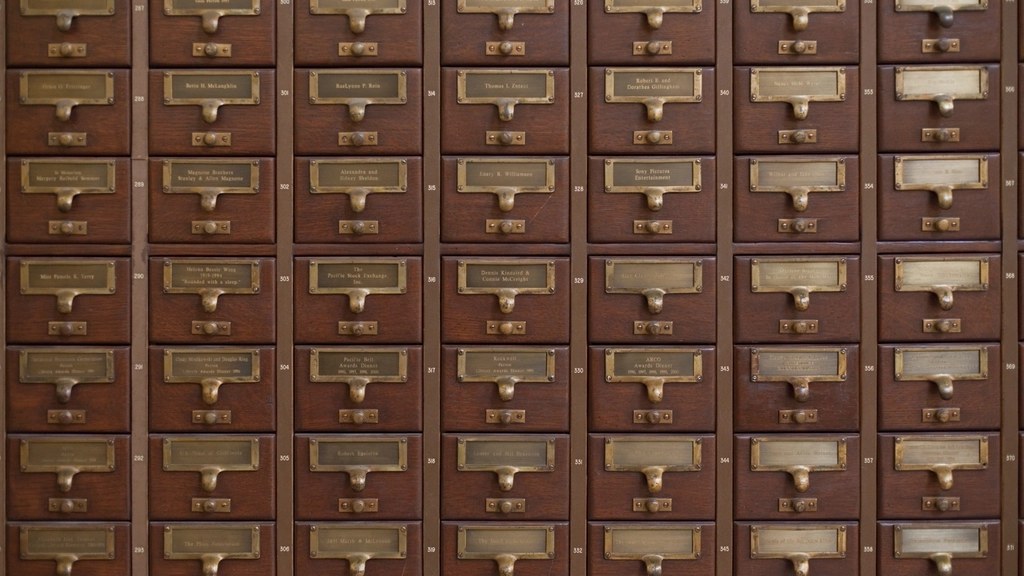
A company brain is a maintained layer of company knowledge (decisions, conventions, ownership and exceptions) that both people and AI agents can query and act on.
Most guides treat a company brain as a search problem. But experiments today point the other way. A company brain fails on what gets written into it, who is allowed to write, and whether agents open it at all.
TL;DR
- Definition: a company brain is a maintained knowledge layer that people and AI agents both read from, covering what the company decided and how it works.
- Difference from a wiki or RAG: a company brain is checked and updated on a schedule; a wiki waits for someone to edit it, and RAG re-reads raw documents on every question.
- Six rules for building one: store only non-inferable knowledge, never let AI summaries become the source, give agents an always-loaded index, test on reworded questions, gate every write, and budget for maintenance first.
- Cost: roughly $200 to $1,650 a month for 50 people, using public per-user and per-query figures.
- Odds: only 17% of 149 teams surveyed by Slite in July 2026 have a company brain that works, and 27% tried to build one and gave up.
What is a company brain?
A company brain is a maintained knowledge layer that captures how a company actually operates (its decisions, conventions, ownership and exceptions) and serves that context to both employees and AI agents. Unlike a wiki, a company brain is kept current by scheduled checks and reviewed updates, so agents can act on it without inheriting stale information.
The term "company brain" was fixed as a category by Tom Blomfield's entry in Y Combinator's Summer 2026 Request for Startups. It followed Foundation Capital's context graphs (December 2025), Andrej Karpathy's LLM wiki and Garry Tan's open-source GBrain (both April 2026), as Slite's history of the term sets out.
A company brain is not any of these three things:
- A wiki. A wiki stores what someone chose to write down and stays that way until a person edits it.
- Enterprise search. Enterprise search finds existing documents but does not correct or retire them.
- A vector database. A vector database is one possible storage component of a company brain, not the brain itself.
How is a company brain different from a wiki, enterprise search, or RAG?
A company brain differs from a wiki, enterprise search and RAG in who maintains the knowledge, not in how it is searched. A wiki depends on people editing pages, enterprise search and RAG read whatever already exists, and a company brain runs scheduled checks that propose corrections for a person to approve.
| Wiki | Enterprise search | RAG | Company brain | |
|---|---|---|---|---|
| Who writes it | People, by hand | Nobody; it indexes what exists | Nobody; it retrieves what exists | People and AI, with human approval |
| How it stays current | Someone remembers to edit | It doesn't; stale pages still rank | It doesn't; stale chunks still retrieve | Scheduled expiry and contradiction checks |
| Conflicting sources | Both versions sit side by side | Both are returned | The model picks one, silently | Flagged for a person to resolve |
| Built for | Human readers | Human searchers | A model answering one question | People and agents doing a task |
A company brain usually contains search and retrieval. What makes it a company brain is the maintenance loop around them.
Why do AI agents need a company brain?
AI agents need a company brain because they fail on company context that exists nowhere in their training data, not on model quality. In Meta's April 2026 test, agents given 59 short context files used roughly 40% fewer tool calls per task. The benefit applies only to knowledge an agent cannot work out from the sources itself.
Two 2026 experiments appear to disagree, and the disagreement is the useful part.
- Meta, April 2026. Meta's engineering team pointed agents at a pipeline of 4,100+ files across four repositories. Without context, agents produced code that compiled but was subtly wrong. With 59 context files, agents used about 40% fewer tool calls and tokens in a preliminary six-task test.
- ETH Zurich, February 2026. Gloaguen and colleagues found that context files did not generally improve task success for coding agents and raised inference cost by over 20% on average. Agents followed the instructions in the files, but repository overviews did not help.
Meta's own post reconciles the two results. The ETH tests ran on well-known open-source repositories that models already know from training, where a context file repeats what the model can infer. Meta's pipeline held rules written down nowhere, such as "deprecated" values that must never be removed because older data depends on them.
The working rule for a company brain follows from both: context helps an agent only when the agent could not have found it alone. Meta's figures are preliminary and self-reported, so treat the 40% as a direction, not a benchmark.
What should go into a company brain, and what should stay out?
A company brain should hold knowledge an agent cannot infer from sources it can already read: why a decision was made, which exceptions apply, who owns what, and which rules cause damage when ignored. Summaries of existing documents should stay out of a company brain, because overviews did not help agents in the ETH Zurich study.
| Goes into a company brain | Stays out of a company brain |
|---|---|
| Decisions and the reason behind each one | Summaries of documents the agent can open itself |
| Naming conventions and their exceptions | General best practice the model already knows |
| Who owns a system, account or process | Raw meeting transcripts with no decision in them |
| Rules that look wrong but must be kept | Plans that were discussed but never agreed |
| Dependencies that cross teams or systems | Any page with no owner and no review date |
Meta's format is a usable template for a company brain page. Each of Meta's context files runs 25 to 35 lines (about 1,000 tokens) and has four parts: quick commands, key files, non-obvious patterns, and cross-references. Meta calls the principle "compass, not encyclopedia".
The last row of the "stays out" column matters most in practice. Meta's team wrote that context which decays is worse than no context at all.
How do you build a company brain?
To build a company brain, pick one workflow, collect 30 to 50 real questions from it, write down only the knowledge agents cannot infer, keep raw sources unchanged, require human approval for every write, give agents a small always-loaded index, schedule expiry checks, and re-test monthly with reworded questions.
Step 1: Pick one workflow and collect its real questions
The first step in building a company brain is to choose one workflow where agents or new hires currently fail, such as customer onboarding or incident response. Collect 30 to 50 questions people actually asked in that workflow. Those questions become the test set for every later step; Meta validated its context files against 55+ test prompts.
Step 2: Write down only what agents cannot infer
The second step in building a company brain is to record the knowledge that exists in people's heads and nowhere else. Meta's analysts asked five questions of each area: what it does, how it is usually changed, what breaks, what depends on it, and what is undocumented. Keep each company brain page to roughly 25 to 35 lines.
Step 3: Keep raw sources unchanged and link every page back
The third step in building a company brain is to store original documents, threads and transcripts untouched, and keep AI-written pages in a separate layer that links back to them. Karpathy's LLM wiki pattern prescribes this raw layer. Critics in the Hacker News thread warned that summaries built on summaries accumulate subtle errors.
Step 4: Let AI propose changes and a person approve them
The fourth step in building a company brain is to route every AI-written change through human review. In Slite's teardown of ten company brains, every builder interviewed defaults to human triage: Gorgias sends each fix through a reviewed pull request and Carrara approves every memory. The stated reason is that agents cannot tell an agreed plan from a long Slack discussion about a possible change.
Step 5: Give agents a small index that is always loaded
The fifth step in building a company brain is to put a short index of what the brain contains into every agent session, with detail fetched on demand. In Vercel's January 2026 evals, an optional skill was never invoked in 56% of cases. An 8KB always-loaded index reached a 100% pass rate, against 79% for the skill with explicit instructions.
Step 6: Schedule expiry and contradiction checks
The sixth step in building a company brain is to give every page an owner and a review date, then automate the checking. Meta runs jobs every few weeks that validate file paths, detect coverage gaps and fix stale references. Slite's teardown lists four maintenance routines in use: consolidation runs, time decay, drift detection against live tools, and human review queues.
Step 7: Re-run the questions every month, reworded
The seventh step in building a company brain is to re-ask the Step 1 questions on a schedule, including versions phrased differently. Results depend heavily on wording and on the test: Vercel saw the same skill produce different outcomes from small changes in instruction wording. A company brain that only answers the original phrasing has memorised a test, not learned the workflow.
How much does a company brain cost?
A company brain costs roughly $4 to $15 per user per month to run on public figures, or 10 to 30 cents per query for a graph-based build. Ingestion and maintenance are cheap; querying drives the bill. For 50 people, that works out to about $200 to $1,650 a month before staff time.
| Published figure | Cost (USD) | Source |
|---|---|---|
| GBrain-style layer, light use | about $4 per user per month | Slite's GBrain review, July 2026 |
| GBrain-style layer, heavy querying | $8 to $15 per user per month | Slite's GBrain review |
| Gorgias Cortex, typical query | $0.10 to $0.30 per query | Slite's teardown, September 2026 |
| Re-indexing a 100-million-token corpus | about $13, one-off | Slite's GBrain review |
Worked example: a 50-person company
This example applies the published rates above to an assumed usage level. The usage numbers are our assumptions, not measurements.
- Human queries: 50 people asking 5 questions a day over 22 working days is 5,500 queries a month.
- Per-query method: 5,500 queries at $0.10 to $0.30 each is $550 to $1,650 a month.
- Per-user method: 50 users at $4 to $15 each is $200 to $750 a month.
- Add one agent: an agent making 20 lookups per task on 100 tasks a day adds 44,000 queries a month, eight times the human volume. At the per-query rate that is $4,400 to $13,200 a month.
The fourth line is the one to plan around. Slite reports that once a company runs real agent workflows, agent queries outnumber human ones by orders of magnitude.
None of these figures includes people. Gorgias maintains its company brain with an eight-person internal AI team, which costs far more than the queries.
Should you build or buy a company brain?
Build a company brain only if you can assign someone to maintain it permanently; otherwise buy one. In Slite's July 2026 survey of 149 teams, 27% had tried to build a company brain and given up, almost always on maintenance rather than technology. Teams of 50 or fewer with willing engineers are the main exception.
| Your situation | Choice | Reason |
|---|---|---|
| 50 people or fewer, engineers who want to own it | Build: Markdown in a git repo plus a coding agent | Near-zero running cost; curation becomes a standing chore |
| You are building your own agents | Assemble: a memory SDK such as mem0, Zep or Letta | You control retrieval, and you tune it yourself |
| More than 50 people, or no named maintainer | Buy: a dedicated company brain product | Upkeep is automated, with human review |
| Already inside one suite and speed matters most | Use the suite's built-in AI | Lowest setup effort; your context stays locked to that platform |
This table condenses Slite's decision guide. Slite sells a dedicated company brain, so weigh its recommendation accordingly.
A self-built company brain is two jobs, not one: curating the content, and rebuilding the system as the tooling changes. Slite describes Gorgias as able to afford both because of its eight-person AI team, and notes that most companies cannot.
Why do company brains fail?
Company brains fail in five ways: they fill with content agents could already infer, AI summaries get treated as sources, agents never open the brain, benchmark scores stand in for real questions, and nobody maintains it. Slite's 2026 survey found maintenance, not technology, behind almost every abandoned build.
Failure 1: Bloat
A company brain fails when it is filled with overviews an agent could have worked out alone. The ETH Zurich study found that context files raised inference cost by over 20% on average without generally improving task success. Every redundant page in a company brain is paid for on every query.
Failure 2: Summaries treated as sources
A company brain fails when AI-written pages become the input for more AI-written pages. Each pass can drop a detail, and the loss carries into every later answer. Slite's review of GBrain makes a related point: overnight maintenance keeps a brain organised but does not check whether it is still true.
Failure 3: The brain nobody opens
A company brain fails when agents have access to it and do not use it. In Vercel's evals the optional skill went unused in 56% of cases and delivered no improvement over having no documentation. A company brain that depends on the agent deciding to look will be skipped about as often.
Failure 4: Benchmark comfort
A company brain fails when a published score is taken as proof it will work on your questions. GBrain's own eval repository reports 49.1% precision@5 on its 240-page test corpus, and 0.076 precision at default settings on an outside precision-only benchmark. Slite found five different rerankers and no shared benchmark across the tools it studied.
Failure 5: Abandoned maintenance
A company brain fails most often because nobody keeps it current. In Slite's survey, only 17% of 149 teams had a working company brain, and 27% had given up on one. Even committed knowledge-base users told Slite they could not keep feeding it by hand.
How do you measure whether a company brain works?
A company brain works if agents complete more tasks with it than without it, open it when they should, answer reworded questions correctly, and rely on pages that are still in date. Measure those four things monthly on your own 30 to 50 questions, plus one security check: whether a planted false fact gets caught.
| Metric | How to run it | Published precedent |
|---|---|---|
| Task success with and without the brain | Run the same tasks twice, brain on and brain off | ETH Zurich and Meta both tested this way |
| Open rate | Share of tasks where the agent actually read the brain | Vercel: skill unused in 56% of cases |
| Reworded-question accuracy | Re-ask each question in different words and compare | Vercel: small wording changes swung outcomes |
| Stale-page rate | Share of pages past their review date | Meta re-validates its files every few weeks |
| Planted-fact test | Insert one false entry and see whether review catches it | GBrain's test corpus plants contradictions and stale facts |
No public source gives pass marks for these company brain metrics, so track the trend rather than a target. The first metric is the one that decides whether the company brain is worth keeping: if tasks do not go better with it switched on, the rest do not matter.
Tool calls per task is a useful secondary number. Meta reported agents without context burning 15 to 25 tool calls on exploration alone.
Is a company brain a security risk?
A company brain is a security risk because anything written into it persists into every later session, so one poisoned entry keeps influencing agents long after the attack. Research published in 2025 and 2026 shows that a handful of crafted documents can steer answers, and that prompt-injection defences do not fully cover memory poisoning.
- Few documents are needed. The PoisonedRAG attack is reported at roughly 90% success with five malicious texts per target question, as summarised in a 2026 paper on agent memory poisoning.
- Existing defences fall short. A 2026 systematic study found that attack success scales with how aggressively an agent reads and writes memory, and that prompt-injection defences give incomplete coverage.
- It is already happening. Microsoft's security team identified 50 distinct attempts over 60 days to plant "remember this" instructions in AI assistant memory through crafted links.
Three controls follow for a company brain, and the first is the same human approval that protects quality.
- Gate writes. No entry reaches the company brain without a person approving it.
- Record provenance. Every entry stores where it came from, so a bad source can be traced and removed.
- Enforce read permissions. Privacy and permissions were a top concern for 63% of the teams in Slite's survey.
Frequently asked questions
Who should own a company brain?
A company brain needs one named owner overall and one reviewer per workflow it covers. The reviewer approves AI-proposed changes for that area, the way Gorgias routes each fix through a reviewed pull request. A company brain with no named owner is the one most likely to be abandoned.
Does a small company need a company brain?
A small company needs a company brain only once it runs AI agents on real work. For teams of 50 or fewer, a git repository of Markdown files read by a coding agent is enough. Slite reports that half of the surveyed teams who tried a company brain started with exactly that pattern.
Is a company brain just knowledge management renamed?
A company brain addresses the same problem as knowledge management, which is scattered and outdated company knowledge. Two things are new: AI agents are now the main readers, and maintenance can be partly automated. The term itself dates from 2026.
How long does it take to build a company brain?
No reliable public figure exists for how long a team takes to build a company brain. The best-known data point is personal, not corporate: Garry Tan built GBrain in about twelve days. Plan the first workflow in weeks, and plan maintenance as permanent.
Is GBrain a company brain?
GBrain is a personal brain that small technical teams can adapt, not a full company brain. Slite's review describes GBrain as built for one person, with no real permission model and mostly local data. A company brain adds shared access, permissions and conflict handling between people.